
Looking to Reduce Energy Costs and Cut Emissions? Start with the Water / Energy Nexus.
By Mike Crowley, Quantified Ventures, and Dave Corliss, VEIC
Most city or town staff concerned with sustainability prioritize buildings for decarbonization programs, and they’re not wrong. Electricity use and fuel combustion that power and heat buildings account for close to a third of global greenhouse gas (GHG) emissions. Yet, hidden among a city’s building stock is the single largest source of energy cost and emissions in municipal governments: water. Without optimizing these water systems, cities face wasted energy (and ratepayer dollars), limited growth, and potentially catastrophic equipment failures.
No building can operate without water. This means bringing in clean water for drinking, cooking, bathing, and more. It also means taking wastewater away and treating it properly. These services typically come directly from municipal water departments, which operate massive pumps 24 hours a day, seven days a week. In addition, they use dryers and aeration blowers that contribute substantially to energy consumption. It’s no surprise that energy costs account for up to 40% of operating costs for water utilities. In fact, operating these energy-intensive waterworks consumes an average of 30% to 40% of total municipal energy use.
To reduce emissions and save money, municipalities need to focus more resources on the water / energy nexus. And the good news is there are technical assistance programs and low-cost financial tools to do just that.
Deferred Maintenance Dilemma
Municipal water utilities across the U.S. suffer from aging infrastructure and soaring preventative maintenance backlogs. The Pew Trusts found that state and local governments will need to spend around $625 billion in water infrastructure by 2045 just to keep existing facilities running. The effects of climate change are expected to add another $448 billion to $944 billion by 2050. With expensive upgrades straining limited budgets, investing in energy efficiency typically falls to the bottom of the priority list.
At Quantified Ventures and VEIC, we partner with water utilities across the country to support infrastructure repairs and upgrades. We see the effects of under-performing infrastructure ranging from higher rates for customers, to catastrophic failures, to stalled economic development because utilities can’t expand their services.
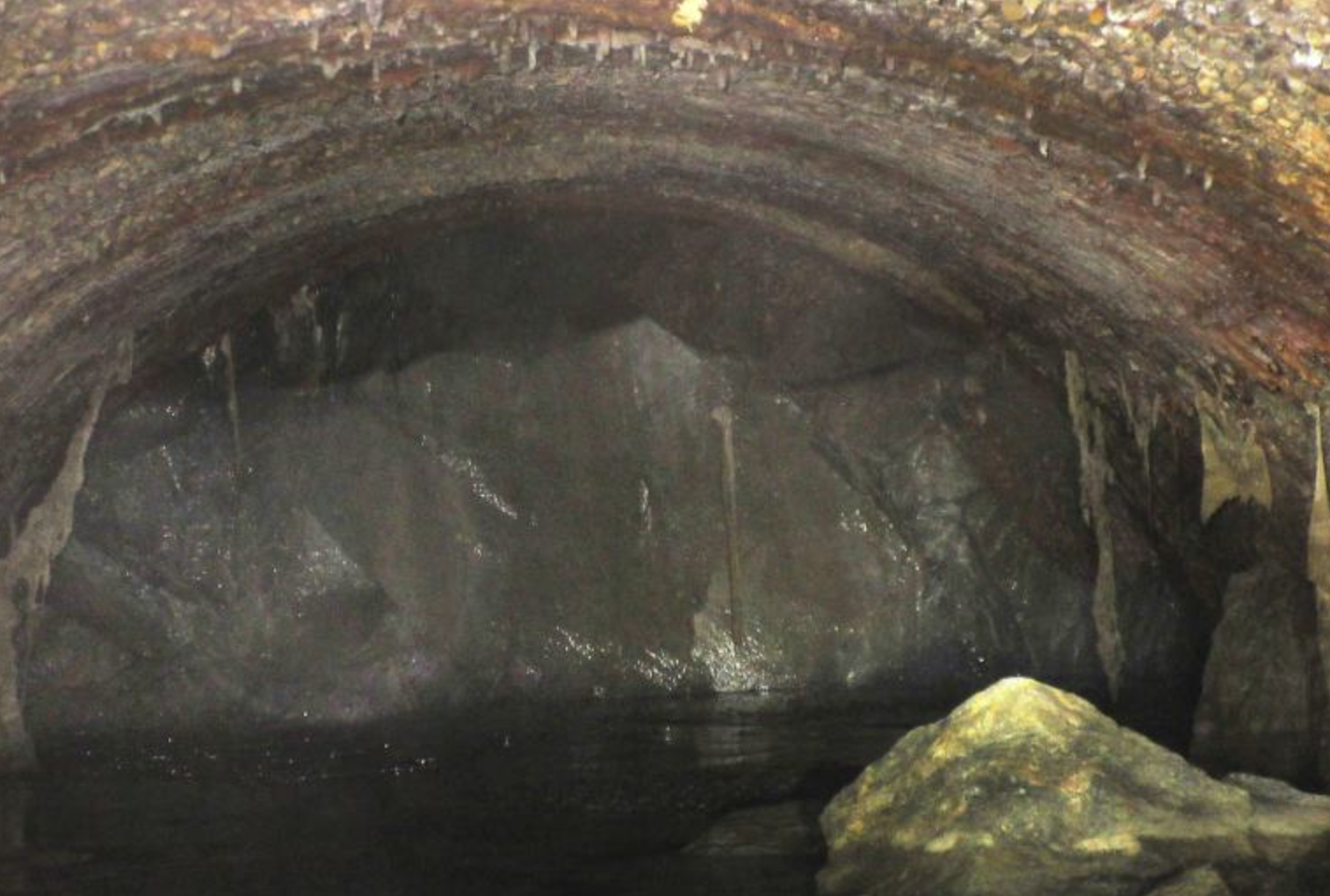
A major blockage inside the Potomac Interceptor collapsed sewer line outside of Washington, DC. Image via DC Water
Failing infrastructure only compounds financial struggles for water utilities. Bluefield Research found that nearly 20% of drinking water in the U.S. is lost due to leaky pipes or improper billing, costing rate payers more than $6.4 billion per year. New York City reported that it lost about 15% of the water (approximately 155 million gallons per day) that was supposed to be delivered to customers due to unbilled water use or leaky pipes. DC Water anticipates spending $625 million over a decade on maintenance for an aging 54-mile pipe that recently experienced a collapse, releasing 240 million gallons of untreated wastewater into waterways surrounding the nation’s capital.
The good news is that because water utilities are so energy-intensive, investments in efficiency measures all have highly attractive returns on investment. These can range from fixing leaky pipes, to upgrading to more efficient motors, installing smarter control systems, and investing in green infrastructure to capture stormwater via pocket parks, rain gardens, permeable pavers, and the like.
So why don’t water utility administrators make these critical, economically attractive investments? The answer is a complex mix of a lack of funding and financing options, and the ever-present priority to simply keep aging facilities operational on limited municipal budgets. In short, efficiency measures aren’t seen as critical to that objective.
The irony is that investing in energy efficiency is a reliable way to free up capital to tackle other preventative maintenance backlogs. Here we propose programmatic approaches that cities can adopt to overcome these challenges and effectively scale energy efficiency investments.
From a Hamster Wheel to a Financial Flywheel
For water utility administrators, the struggle to keep aging infrastructure operational can feel like running on a hamster wheel. To keep facilities running, administrators need to cobble together fixes, while never making meaningful progress on much-needed plant upgrades. Those challenges only grow for communities that need to expand their water utility service to new homes and businesses.
What’s different about energy efficiency investments is that every dollar spent results in direct operational savings. This creates a financial flywheel: upfront capital buys measures (e.g., leak repairs, efficient motors, smart controls) that immediately reduce energy and O&M costs, producing annual savings that repay the initial investment over a predictable period of time.
The financial flywheel can be leveraged to break free of the hamster wheel, allowing administrators to make material progress toward a better operating facility.
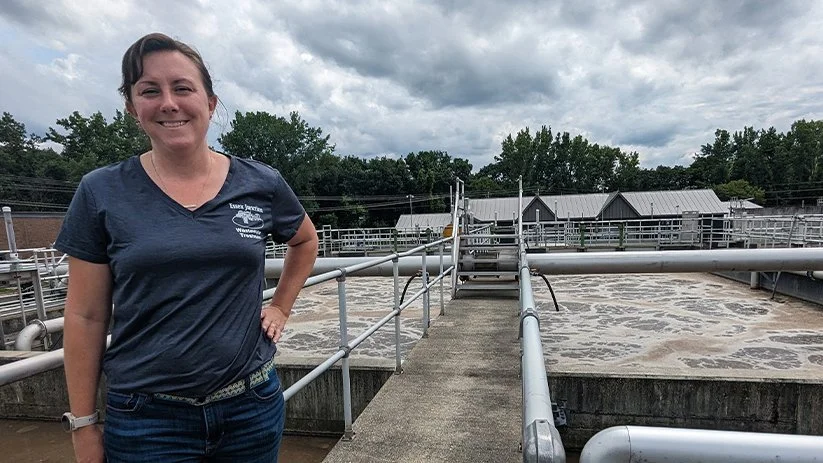
Essex Junction, VT, water quality superintendent Chelsea Mandigo at the city’s wastewater treatment plant. Photo courtesy of Efficiency Vermont.
The Vermont city of Essex Junction provides an example of how investing in efficiency pays off. The city’s water treatment plant has been partnering with Efficiency Vermont, a statewide energy efficiency utility operated by VEIC, for more than 20 years. During this time, the facility has saved 1,600 MWh in annual energy use, reduced costs and chemical inputs, and cut the facility’s GHG emissions. The longstanding relationship and technical support led to a recently-completed $15.3 million multi-year refurbishment that right-sized equipment, improved filtration, optimized oxygenation, and reduced energy waste. The effort also helped the facility tap new energy sources, like solar and geothermal, as well as capture otherwise wasted energy by using an anaerobic digester. The initiative paid for itself in seven years—showing that smart efficiency investments can save energy and reduce costs while also supporting critical infrastructure upgrades.
Fortunately, municipal water system administrators have access to inexpensive capital through the EPA State Revolving Funds (SRF), tax-exempt municipal bonds, and emerging financing sources such as green banks (including the Coalition for Green Capital). However, accessing these financing sources requires savvy program navigation and committed leadership.
The primary sources of capital for water utilities are the EPA’s two SRFs: the Clean Water State Revolving Fund (CWSRF) and the Drinking Water State Revolving Fund (DWSRF). Established as amendments to the Clean Water Act, the EPA provides annual grants to states to capitalize their own CWSRF and DWSRFs, which function like revolving loan funds for water infrastructure. These SRFs provide utility administrators with below-market loans and even principal forgiveness if they follow certain criteria set out by the states through annual “Intended Use Plans” (IUPs). Energy efficiency and renewable energy investments are allowable with these funds.
QV supports state SRF programs as a Technical Assistance (TA) provider for the EPA’s Environmental Finance Centers (EFCs), and through direct support to states. The EFCs pay for TA, so utilities can receive capacity support at no cost to them.
SRF dollars are highly flexible, as long as they meet each state’s IUPs. State-based SRF administrators can leverage these dollars as revenue bonds to increase their overall capital pool. For example, the New York State Energy Research and Development Authority (NYSERDA) uses revenues from its SRF to issue revenue bonds to invest in energy efficiency across the state, including its water utilities.
While the SRFs fill an important financing gap, they do come with some strings. All SRF financing comes with federal “crosscutter” requirements, including the “Build America, Buy America” Act, the Davis Bacon wage rates, and disadvantaged business enterprise (DBE) requirements. The job of the EFCs and their TA providers is to help water utilities navigate these crosscutters and provide capacity support to manage debt service.
While SRFs should be the primary source of capital for eligible water utilities, there are other financing options that could supplement SRF dollars and offer more flexibility on the use of funds, especially when it comes to tapping into predictable savings from energy efficiency.
Toward Net Zero Water Utilities
Imagine that you were able to cut 40% off your expenses each year while still receiving the same goods and services. A net zero water utility does just that: with strategic investments in energy efficiency, it’s possible to power the entire plant with renewable energy and with battery backup. This not only helps reduce utility energy usage and costs, it also cuts GHG emissions.
Cities like Windsor, Calif., are leading by example. Its wastewater treatment facility (WWTF) is powered with 100% clean energy through a solar array. As part of their net zero commitment, they also aim to use 100% recycled water and capture 100% natural biosolids that can be used for fertilizer and land reclamation. Gresham, Ore., achieved net zero status for its WWTF, which treats about 13 million gallons per day. The process produces activated sludge that is converted to biogas through anaerobic digestion. The biogas is then used as fuel to run generators that power the plant.
Through our partnership with the Southwest EFC, QV is supporting water utilities across Texas to achieve similar results. Texas has more than 7,000 water utilities; 90% of which serve 10,000 or fewer connections. We’re developing a program that offers financing for utilities to implement energy efficiency and renewable energy projects. The program will tailor financing so that debt service could be covered by energy savings. The goal is for facilities to maintain a positive cash flow through the life of the loan. Once the loan is paid off, they can enjoy the savings and reinvest in more energy projects.
This financial model is not new, but adoption has been slow because it requires utilities take steps like conducting energy audits, estimating and accounting for energy savings, and planning for service interruptions to install upgraded equipment.
This is where free TA support from the EFCs comes in handy. QV can support water utilities throughout the audit, implementation, and financing process at no cost to rate payers.
QV’s offering in Texas is one of many successful models. Bayonne Municipal Utilities Authority Water entered into a public/private partnership concession agreement with the Bayonne Water Joint Venture. Under the deal, Bayonne Water paid $150 million to the city to pay off debts and help stabilize the city’s budget. It also agreed to spend $500,000 per year on preventative maintenance and $2.5 million per year for capital upgrades. In return, Bayonne Water recouped their expenses through collecting water rates and lower operating costs through efficiency upgrades.
Tap Into Savings
The public sector has many tools at their disposal to finance net zero water utilities, including free TA and tax-free and subsidized capital. With the right partners, municipalities can find innovative solutions, including public/private partnerships, cash-flow positive lending, and even debt restructuring. This goes a long way toward thinking holistically about water services.
As deferred maintenance of water infrastructure continues to climb, the urgency for water investments can feel dire. However, most municipalities can start to get on top of their infrastructure needs by thinking creatively about how to tap significant operational savings hidden in the ground (and pipes) under their feet.
