
The Environmental Sector Must Both Prop Up More Place-Based Initiatives and Scale Them Faster
By Chloe Wingerter, Associate Director
About 18 months ago, I felt a strong pull to be more deeply connected to the place where I live. In service of that goal, I relocated to Maine. In the last 12 months, I like to think I’ve made some good strides in that direction. The bagel shop around the corner knows me by name, there’s a nearby trail that has become a weekly visit, and my neighbors actually wave at me.
But there’s something bigger there. The sense of place roots us to people, community, and landscapes – all things we want to protect in a rapidly-changing world. When you put that up against the speed at which our climate is changing and the volume of work that needs to be done to address it, knowing where to even start is overwhelming. And yet the environmental sector keeps treating depth and speed as if they’re opposites, as if caring enough about a place to get it right and moving fast enough to matter at scale can’t coexist.

At Quantified Ventures, we often hear our clients express a desire for place-based financing solutions. On the flip side, other clients want to deploy solutions that are scalable nationally or even globally. It can be difficult to know what the right approach is. The truth is both camps are right, and treating this as an either/or choice is actually slowing the sector down.
We regularly advocate for more fluidity between the two approaches to advance climate efforts in both depth and scale. As a sector, we need to prop up more place-based initiatives, and we need to scale them faster.
Place-Based Investing: An Argument for Depth
Place-based investing isn’t a new thing. The Community Reinvestment Act in 1977 encouraged financial institutions and local banks to offer credit to low-to-moderate income communities in their district. The Community Development Financial Institution (CDFI) Fund developed in 1994 supported the growth of CDFI institutions that promote economic development to underserved communities. Community foundations have begun to develop their own internal funds and create financial offerings that work for their communities. However, only in the last few years has the term “place-based investing” become a buzzword in the impact investing and innovative finance worlds.
The value of place-based investing is that it is centered around the history, ecology, culture, politics, and social dynamics that are deeply rooted in a community or region. This allows for more genuine relationship development, understanding of the problem, and ultimately trust. In any given region, there are also likely untapped capital providers that may be interested in seeding investment to achieve a beneficial outcome for their community. Small community foundations, donor-advised funds (DAFs), and even high net worth individuals (HNWIs) are motivated to put their money into the places they call home. Plus, quite possibly one of the most undervalued arguments for place-based investing is the potential for financial programs and vehicles to ultimately be owned and operated by local communities themselves. This goes beyond just designing capital in new ways; it changes governance structures, power dynamics, and wealth generation.
To move this from the philosophical to the practical, it’s helpful to look at two examples of place-based regional efforts that Quantified Ventures has been involved with recently.

The Mississippi River Basin is a vast area that supports watersheds, habitat, restoration, livelihoods, and economic development. Nearly 30% of Americans live in the MRB, with 1.5 million people’s employment directly tied to the river network. More than 20 million people rely on the Mississippi River for drinking water. QV is currently engaged in phase 2 of a project designed to scale reforestation across the Mississippi Alluvial Valley for economic and environmental benefit. Earlier work predominantly focused on building relationships and identifying root issues that inhibit the financing of nature-based solutions in the region. To get to the core of the problem in communities and to really advance place-based efforts, it takes many conversations and in-person interactions often held on farms, in fields, and around kitchen tables. Plus, it takes persistence to gain community trust and cross-sector experience to provide good counsel to the individuals most closely associated with the environmental issue.
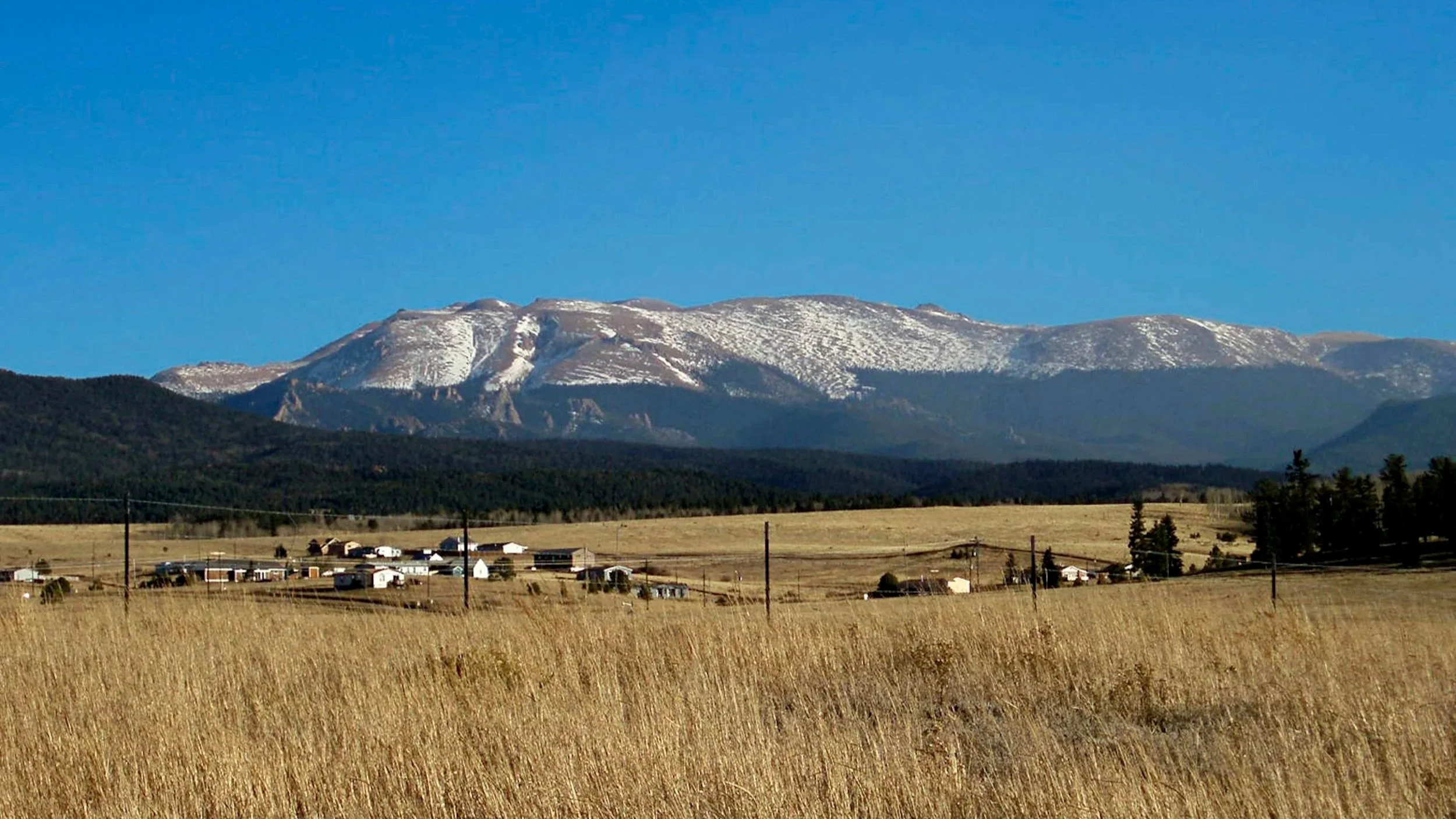
Another U.S. watershed, the Colorado River Basin, is facing an unprecedented water crisis. QV has been working alongside partners for the last several years to better understand the problem and identify innovative financial solutions. This includes working with local groups like the Colorado West Land Trust to develop replicable models to finance property acquisition for the purpose of land conservation and protection. One of the greatest lessons learned here has been how a successful place-based initiative truly takes the commitment of all ecosystem partners involved. Community foundations can offer support such as small capital investments and loan guarantees, but they are limited in large capital investments and operating capacity to manage a fund. Green banks or other financial institutions can step in to manage and operate a community fund, but finding the right institution with conservation knowledge and sustaining capital to operate can prove challenging. The partners on the ground (particularly organizations like Colorado West Land Trust, Colorado Water Trust, Blue Commons, etc.) bring immense energy and effort to find a solution, yet they can’t shoulder the risk entirely themselves. For a place-based effort to really land, each community partner must share both the risk and the reward.
Success stories aside, place-based initiatives often face headwinds. To begin, it takes time, money, and effort to develop bespoke initiatives in each new community and region. Secondly, leveraging smaller pockets of funds (e.g., community funds, DAFs, HNWIs) can result in cobbling together smaller amounts of seed investment which takes time and effort to secure and manage for the long-term. Lastly, developing new financial programs and vehicles requires some backbone infrastructure: administrative and operational capacity, financial acumen, and capital to operate. These requirements are not guaranteed in a community or region, especially in under-resourced communities, which often face some of the most pressing climate threats. None of that is an argument against place-based work; it’s an argument for pairing that depth with tools that let good models travel faster and grow further.
The Movement to Scale
Unfortunately, climate change isn’t going to wait for unique bespoke models to be developed for each community and region. Nor is there enough capital to fund these efforts one-by-one.
We need to advance solutions with modular structures that have elements which can be recycled across different regions of the U.S. and North America. The efficiencies of scale come with replicable financial and governance models, increased knowledge of what works and what doesn't work, and experts who can guide communities through design and implementation.
At QV, we also recognize that every community is different. There will be inevitable tensions, inconsistencies, and differences when attempting to bring a model that was successful elsewhere into a new community, region, or geography. However, we challenge the premise that a solution be either specifically place-based or simply built for scale.
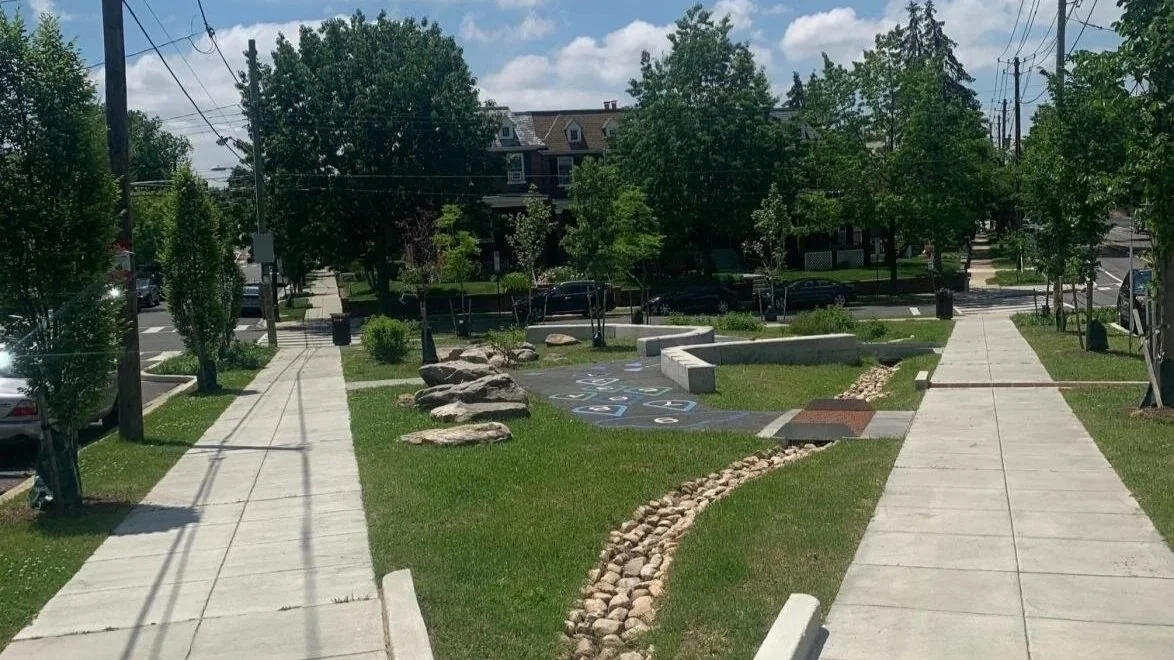
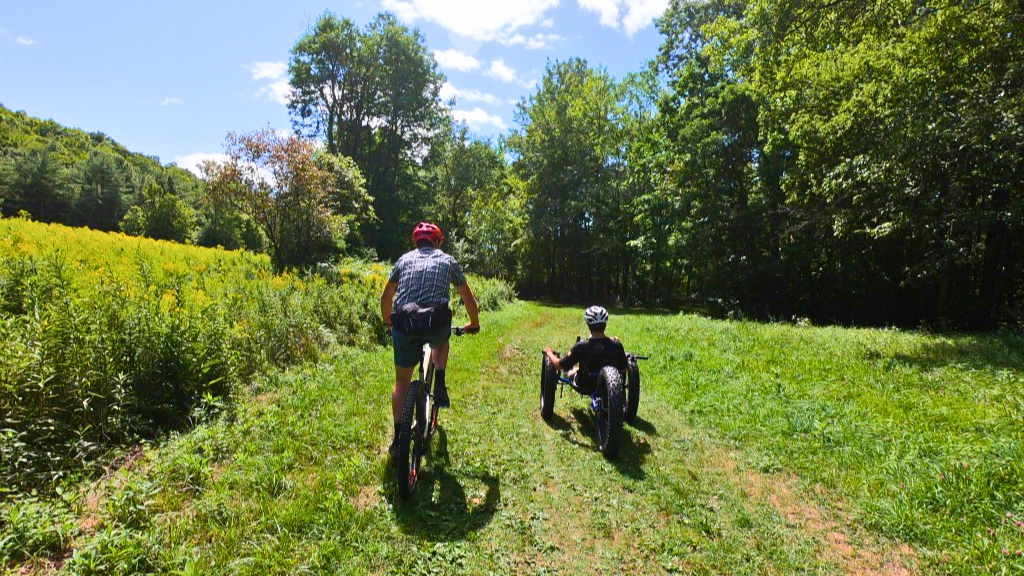
The most common trajectory is to create success in a pilot or proof of concept in one area and then explore replicability elsewhere. QV has seen this work successfully in our work with the U.S. Forest Service and outdoor recreation, in conservation agriculture, and in green stormwater infrastructure.
To move initiatives and efforts to scale, below are some beginning questions worth asking:
Is the model, vehicle, or program relatively simple to replicate elsewhere?
Is the ecology, landscape, and/or environmental issue relatively similar?
What infrastructure (e.g., backbone organizations, financial institutions, community capital) is in place?
Is the community and those most closely associated with the problem/solution bought in and engaged?
Is there demand for a new program, product, or initiative in a new place?
Are we scaling this because it's what the community needs, or because it's easier to fund?
It's easy to get caught up in buzzwords like place-based and scalability. But if you strip that away, the reality remains: We need depth within communities, and simultaneously we need scale to reach broad impact quicker.
At QV, we always advocate just starting. Instead of endlessly debating the merits of an approach, test it out. Identify if a community or region feels ripe for a place-based initiative. Zero in on where models are working well enough to explore replicating them in new areas. Always look to adjust and tweak a program when replicating it. And, maybe most importantly, don’t be afraid to fail. One model or approach is not going to work in every community or region.
Have an idea for a place-based initiative or bringing a local initiative to greater scale? We’re happy to brainstorm ideas and explore opportunities together.
